Tehiru Aerial Systems, Inc., a Delaware Corporation, and its subsidiary
Tehiru Space Technologies Ltd, an Israeli Corporation (together < 25 employees),
qualify as non-traditional defense contractors. NAICS code: 336411
— Unmanned and Robotic Aircraft Manufacturing.
Controlled Unclassified Information (CUI)
This submission contains Controlled Unclassified Information, company-proprietary, and unrestricted
information only, and shall not be disclosed outside the Government or used for any purpose other than
to evaluate this application. No classified information is included.
Tehiru Aerial Systems, Inc. respectfully submits this application in response to RFI
70RSAT26RFI000018 for participation in the DHS Science & Technology kinetic sUAS mitigation
demonstration. Our submission addresses a single topic area — Munition / Kinetic
Interceptor — and presents the Citadel Multi-Domain Counter-UAS Interception
System. The following identifying information is provided per Section 3.1.
Company Name
Tehiru Aerial Systems, Inc.
Company Address
15 Lily Pond Ct., Rockville, MD 20852
UEI Number
[UEI — INSERT SAM.gov Unique Entity ID]
Size & Socio-Economic Status
[CONFIRM — e.g., Small Business under NAICS 332992]; non-traditional defense contractor (Tehiru Aerial Systems, Inc. + subsidiary Tehiru Space Technologies Ltd, together < 25 employees).
Jacob Lopata, Chief Technology Officer · (312) 252-9770 · jacob.lopata@tehiru.systems
Contracting POC
[CONFIRM Contracting POC — name / title / email / phone] · Administrative: Aaron Prat, CEO · (213) 281-0860 · aaron@tehiru.systems
Contract Vehicles
[LIST awardee vehicles (BPA / IDIQ / OTA) + administering agency, or state “None”]
RFI Topic Area
Munition — Kinetic Interceptor (single topic area per submission).
System Title
Citadel Multi-Domain Counter-UAS Interception System
Availability — Nov 2026
Yes — demonstrable November 2026 at a CA / FL / NV / OK / TX test range.
Fielding history (last 3 years): Tehiru Aerial Systems has supplied hundreds of
autonomous attack drones, under special authorization, to operational units in collaboration with
Israel’s Directorate of Defense R&D (Maf’at) and Unit 81. The Citadel interceptor and its
guidance/autonomy stack derive from these fielded systems.
[CONFIRM any U.S./commercial fielding to list here, if applicable]
This submission is a participation application, not an acquisition proposal. All materials are
limited to Controlled Unclassified Information (CUI), company-proprietary, or unrestricted
information and are marked accordingly.
Respectfully,
Aaron Prat Chief Executive Officer · Tehiru Aerial Systems, Inc.
Tehiru Aerial Systems, Inc.
Table of Contents
1 Section 1 — Corporate Expertise
1
1.1 Company Background
1
1.2 System Description and Capabilities
1
1.2.1 Citadel: Multi-Domain Counter-UAS Defense System
1
1.2.2 System Components (Hive · SharkOS)
1
1.2.2.3 Cipher Interceptor
2
1.2.2.4 Availability & Fielding
2
2 Section 2 — System Description and Cost Estimate
2.1.6–2.1.9 Systems · Laydown · Mobility · Engagement
5
2.2 ROM Costs · Regulatory Registration
5
2.3 Performance · Requirements vs. Response
6
2.3.5 Capabilities-Sought Coverage
7
2.4 Demonstration Availability
7
Visual Appendix — System Imagery
A-1
Tehiru Aerial Systems, Inc.
1 — Corporate Expertise
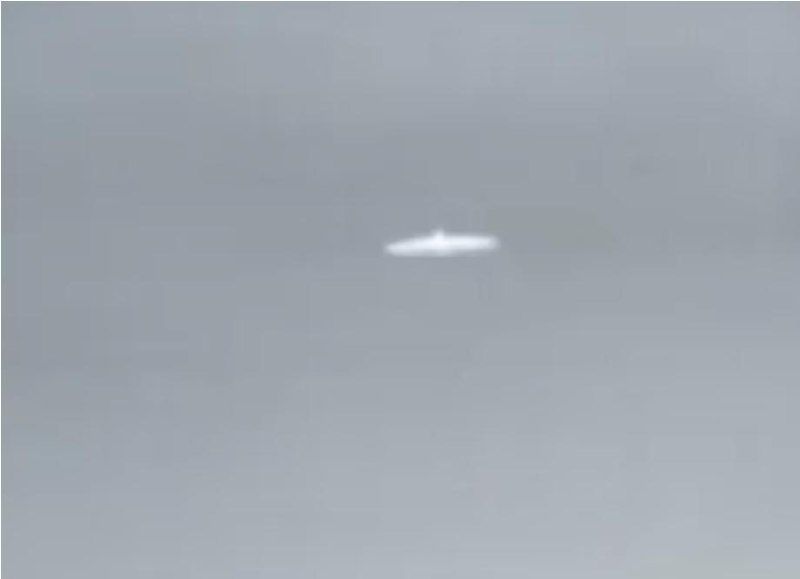
Citadel interceptor on an autonomous intercept run (see Visual Appendix, Fig. A-1).
1.1 Company Background
Founded in 2022 by a team of robotics enthusiasts and UAS technologists,
Tehiru Aerial Systems and its subsidiary Tehiru Space Technologies Ltd
design and build fully autonomous counter-UAS and counter-ATGM systems at scale with unmatched
cost-efficiency. Tehiru is revolutionizing low-altitude, short-range air defense by developing
sophisticated communication and autonomy systems that enable intelligent, precision operations with
minimal human intervention. Tehiru has supplied hundreds of attack drones, under special authorization,
to operational units in collaboration with various military divisions and specialized units — including
Israel’s Directorate of Defense R&D (Maf’at) and Unit 81.
1.2 System Description and Capabilities
1.2.1 Citadel: Multi-Domain Counter-UAS Defense System
The Citadel Interception System is a fully autonomous threat-mitigation system designed
to provide advanced protection against hostile air attacks. With the ability to counter Group 1–3 UAS,
Citadel delivers a reliable, scalable solution for force and point protection. It is a
detection-system-agnostic, multi-platform solution deployable across air, land, and sea.
On land it installs as a fixed site or on a range of vehicles; at sea it deploys on naval vessels to protect
high-value maritime assets. Detection-system integration may be accomplished by Tehiru partners or existing
government-designated providers, enabling near plug-and-play operation with the Citadel architecture.
(See Visual Appendix, Fig. A-1 — engagement sequence.)
1.2.2 System Components
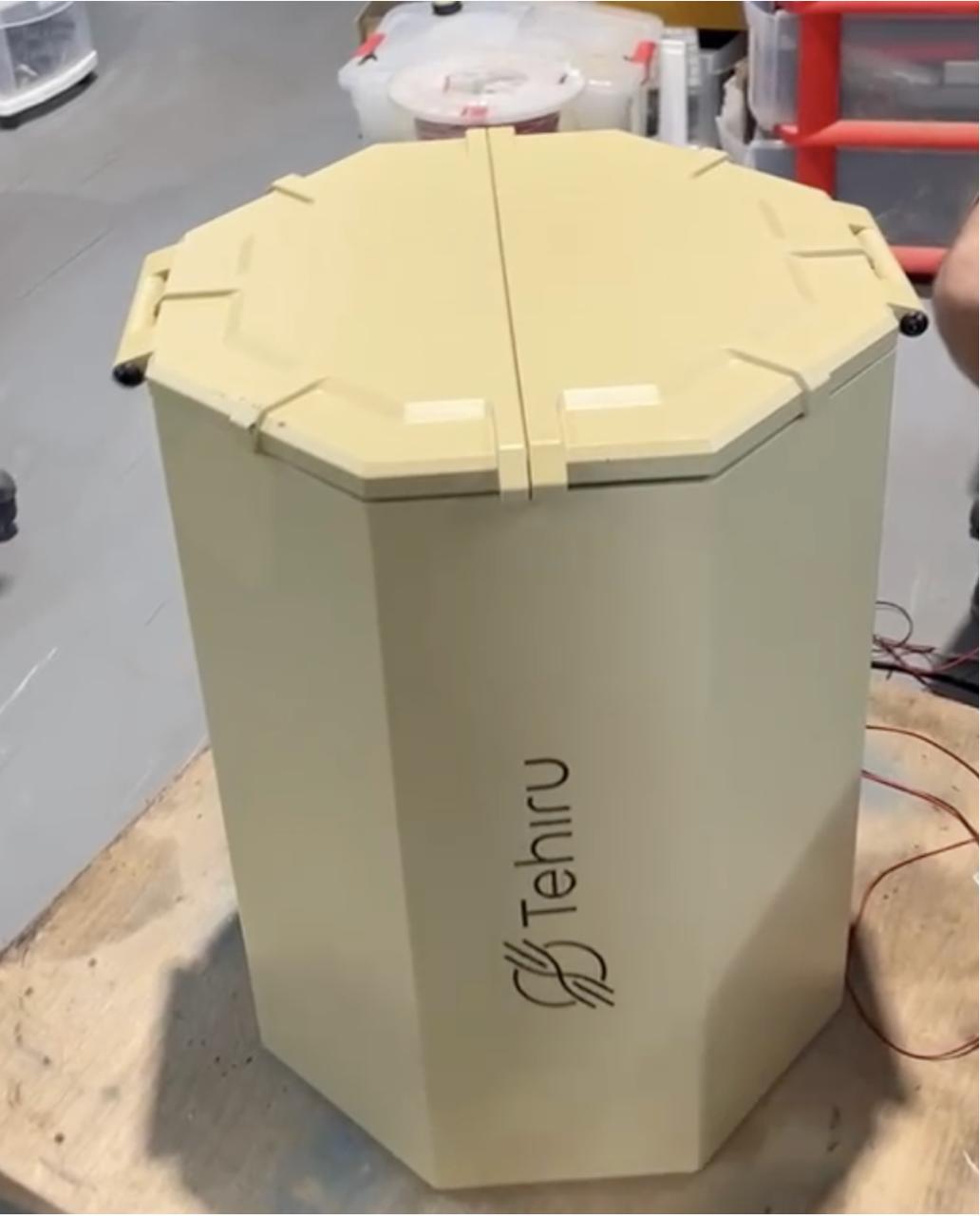
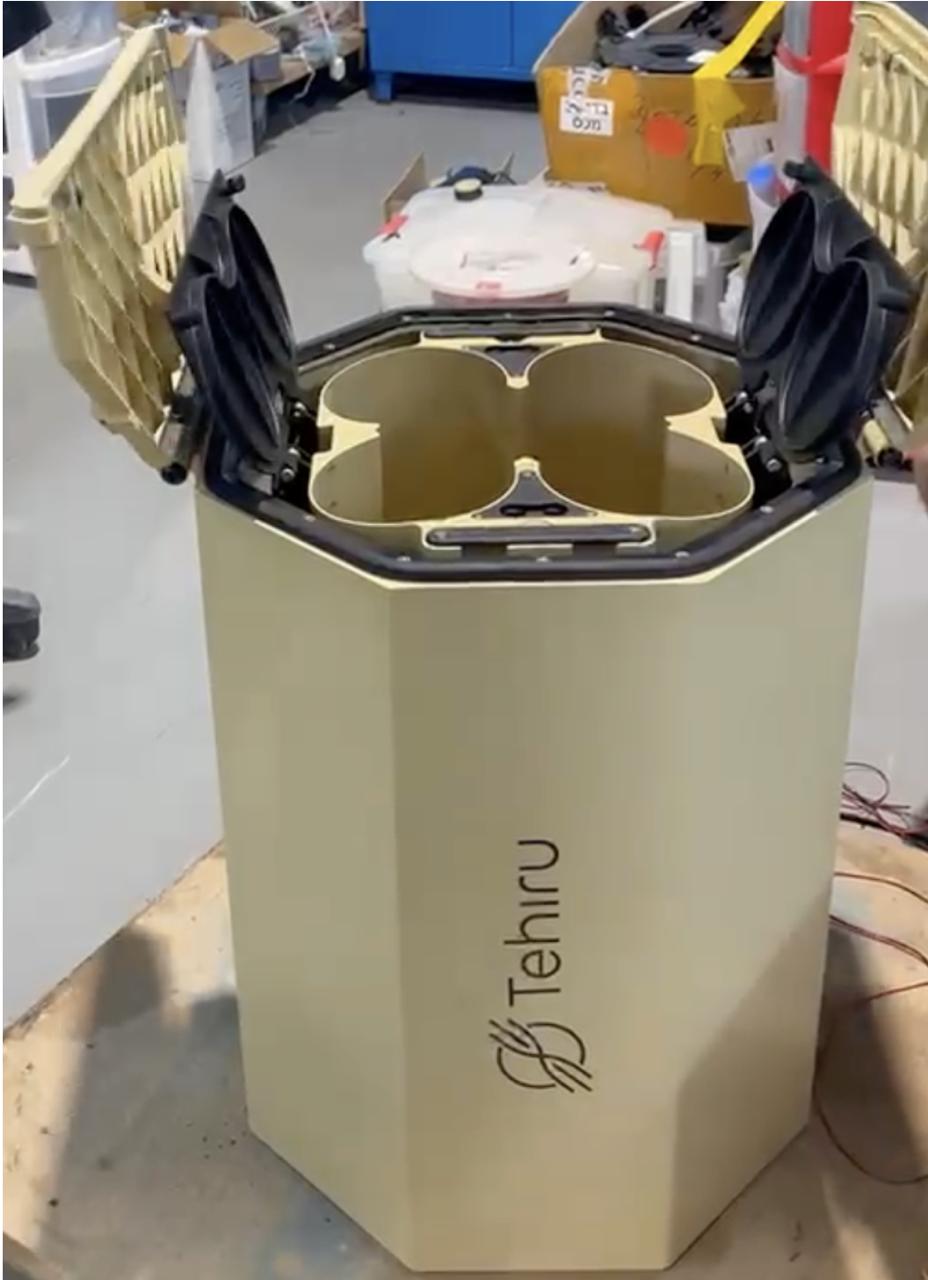
1.2.2.1 The Hive + Magazine
The Hive is Tehiru’s integrated interceptor management and deployment system, designed to
store, sustain, and launch interceptors directly from mobile or fixed platforms across multiple domains.
Each Hive houses two interceptors in a hot-swappable magazine for controlled, sequential, rapid deployment,
and manages the interceptor energy lifecycle (charging, health monitoring, readiness optimization) so each
unit stays mission-ready without manual intervention. The system manages launch sequencing and deployment
logic in synchronization with the interceptor’s onboard flight-management systems, transforming host
platforms into sustained cUAS defense nodes. A full Citadel interceptor unit consists of
two Hives and five magazines: two installed in the Hives (four interceptors launch-ready)
and three additional magazines stored and charged in a docking station for rapid reload.
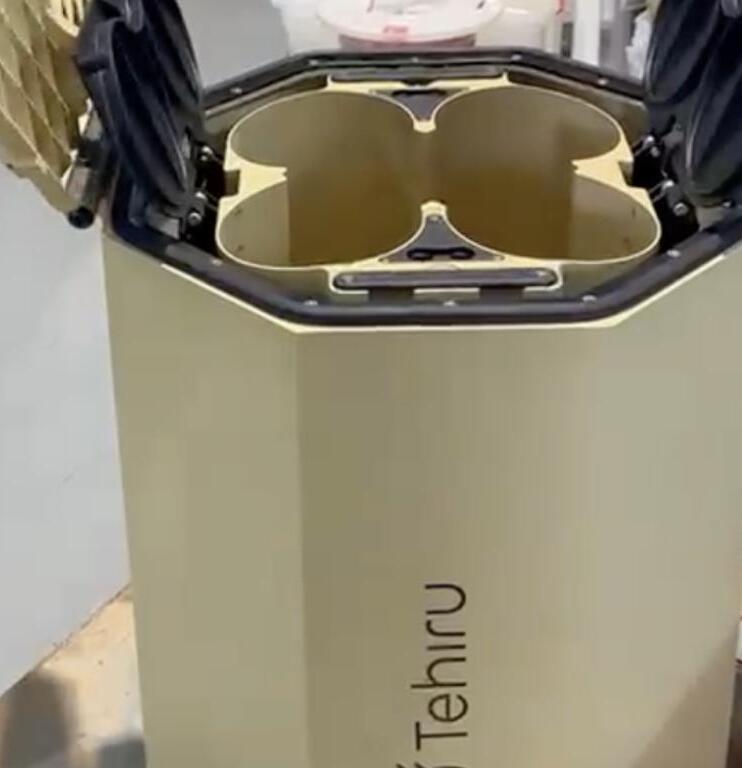
(See Visual Appendix, Fig. A-2.)
1.2.2.2 SharkOS
Tehiru’s SharkOS is the distributed engagement and fire-control operating system powering
the Citadel cUAS stack. Operating directly on each interceptor, it enables localized guidance, intercept
execution, and terminal engagement logic at the edge — supporting scalable defense against multiple
simultaneous threats. Each interceptor executes mission logic independently while a ground-based scheduling
layer manages tasking, prioritization, and resource allocation, minimizing operator burden and compressing
time-to-effect. SharkOS aligns with modular open-systems principles, interfacing with
third-party or government-provided detection systems through defined target-state and performance
requirements, and operates over fully encrypted, resilient communication pathways in contested, degraded,
or sporadic-communication environments.
Tehiru Aerial Systems, Inc.
1
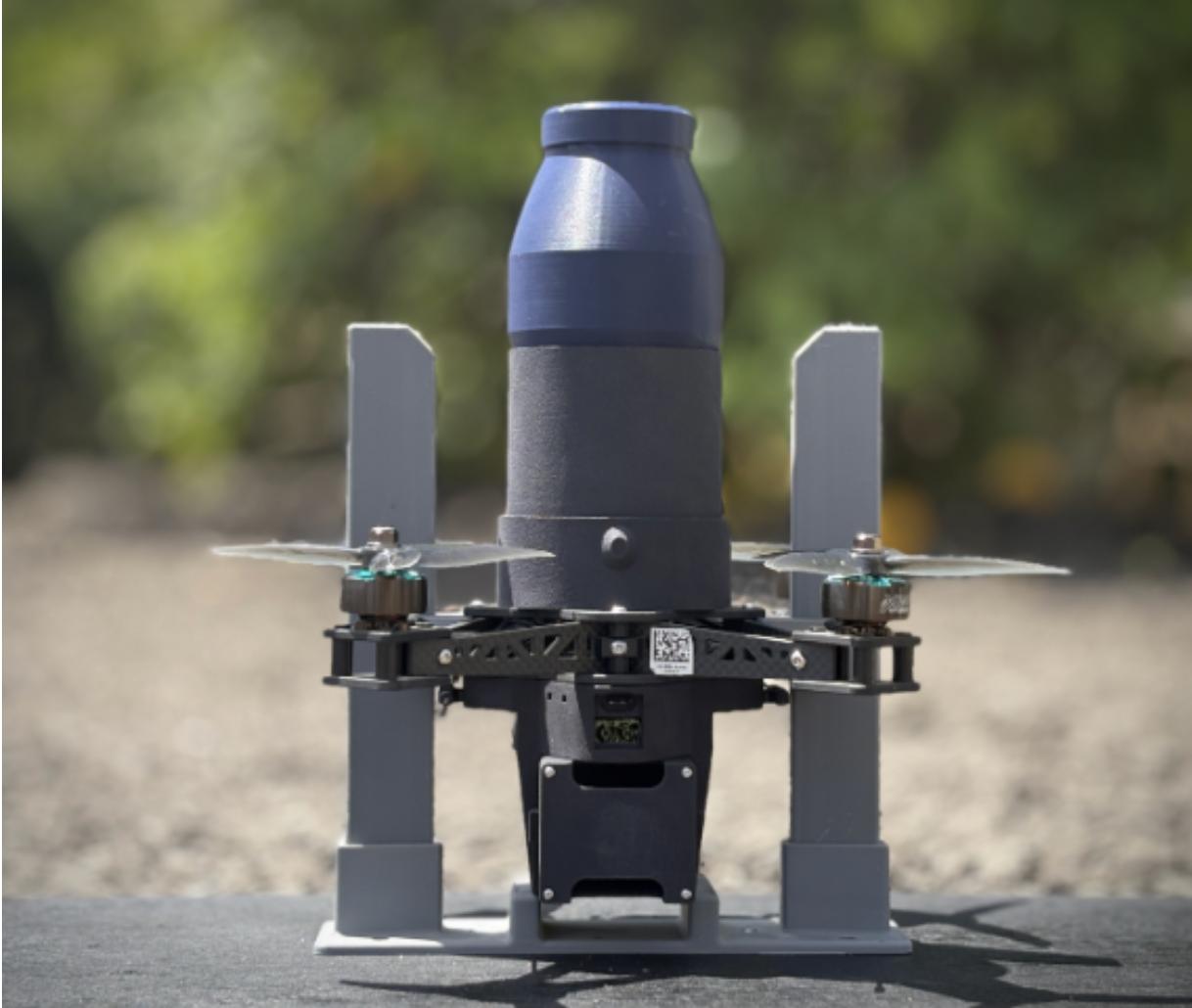
Fig. A-3 — Cipher interceptor
1.2.2.3 Cipher Interceptor
Cipher is a modular interceptor drone designed for integration with the Hive platform.
As a hardware system it provides the airframe, payload interfaces, and onboard compute required to support
SharkOS for mission execution and control. Rather than a single fixed configuration, Cipher can be delivered
in multiple variants tailored to customer requirements, with configurable payloads and
performance characteristics. (See Visual Appendix, Fig. A-3.)
1.2.2.4 Availability & Fielding
The Citadel Interception System is in advanced development at TRL 6 and is expected
to be available for demonstration, as described herein, by November 2026. The interceptor
and its guidance/autonomy stack derive from Tehiru systems fielded with Israeli defense units (Maf’at, Unit
81) within the last three years. [CONFIRM any U.S./commercial fielding to add]
TRL 6 — prototype demonstrated in a relevant environment
Tehiru Aerial Systems, Inc.
2
2 — System Description & Cost Estimate
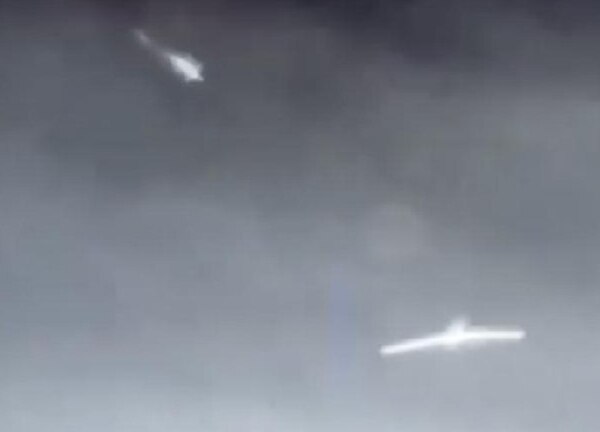
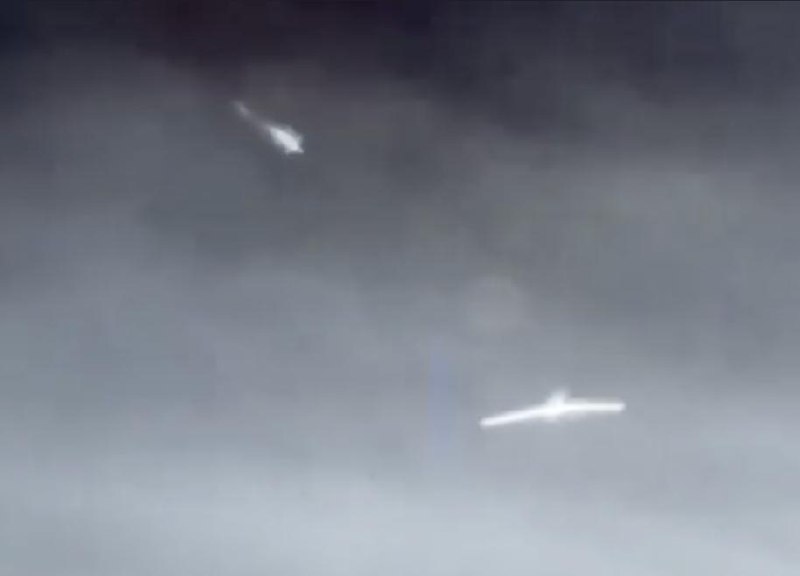
Terminal closure on a fixed-wing sUAS
2.1 Overview
2.1.1 System Description
The Citadel Interception System is a ground-launched, kinetic counter-UAS (cUAS) system designed to
detect, track, and neutralize airborne UAS threats. It comprises four principal subsystems: a ground-based
detection subsystem, a ground control station (GCS), an autonomous interceptor vehicle, and a kinetic defeat
munition (warhead). The system is detection-system agnostic — the Cipher Interceptor integrates
with any appropriate ground detection system using radar, LIDAR, EO sensors, or a fusion thereof.
The GCS receives and processes target-state data, monitors the tactical situation, and determines the
launch moment based on target range and flight dynamics. Upon the decision to engage, it transmits a launch
command with real-time guidance to the interceptor over a dedicated RF uplink. The interceptor — a multi-rotor
UAS — executes a fully autonomous, multi-phase interception using onboard edge compute, generating a
dynamically updated intercept path and controlling attitude and thrust to close on the target. A secondary RF
channel provides an independent manual flight-control link for operator safety override and security
contingencies. An onboard proximity-detection system senses the target within 15 m and, at a predetermined
time, signals warhead detonation to neutralize the threat.
2.1.2 Operational Concept and Employment
Detection subsystem acquires and tracks a threat UAS (RCS −20 dBsm), continuously transmitting position (x/y/z) and velocity (vx/vy/vz).
GCS evaluates range-to-target against the engagement envelope; when the threat enters it, the GCS initiates intercept via launch command + guidance on the primary RF uplink.
Interceptor executes an autonomous, multi-phase launch sequence adapted to the threat’s state.
Interceptor navigates toward the threat, continuously pursuing it using updated detection-subsystem state data.
At T-3 s to interception, the warhead is armed.
In the terminal phase (<15 m separation), the proximity-detection system signals the electronic safe & arm (ESAD) to detonate and neutralize the threat.
Tehiru Aerial Systems, Inc.
3
Hive interior — magazine bays (Fig. A-2)
2.1.3 Technology Readiness Level (TRL)
The integrated Citadel system is assessed at TRL 6. The onboard guidance and autonomous-
intercept system has been validated through successful intercepts of Group 1 and Group 2 UAS in
representative environments; end-to-end validation from detection and ground-station cueing through autonomous
intercept has been demonstrated in a relevant environment. The warhead/ESAD and proximity-detection system is
in active development at TRL 5.
2.1.4 Pertinent Technical Specifications
A · Interceptor / Effector
All-up weight ≈ 1 kg (excl. effector); 5-inch propeller config.
Warhead: total 650–800 g; HE 150–200 g; fragmentation/omnidirectional, cylindrical; electric high-voltage ESAD.
2.1.5 Support / Sustainment Concept
Interceptor — 2 per Hive in a hot-swappable magazine, ready for sequential engagement; expendable, restocked after each engagement; rated −20 °C to +40 °C (storage to +70 °C); stored in-theater in sealed magazines.
Warhead — segregate munitions by type/hazard class/compatibility group; maintain minimum separation distances (storage, personnel, vehicles, fuel, command); limit explosive quantity per location; use berms/revetments/hardened structures; control ignition sources (flame, static, RF emitters, exhaust).
GCS — operates autonomously once engaged, minimal operator intervention; a single operator supervises and activates; operator-level routine maintenance, no on-site technician for day-to-day operation; single flight operator.
Manufacturer — Tehiru provides full lifecycle support (software updates, releases, hardware repair/replacement); updates delivered and managed by Tehiru. Detection subsystem — sustainment by a third-party supplier.
Tehiru Aerial Systems, Inc.
4
Hive — closed transport state
2.1.6 Number of Systems — Simultaneous Use
One complete system will be fielded — a single Hive, one GCS, and one detection subsystem. The Hive supports
single-interceptor engagements; approximately 10 interceptors will be on-site for the
demonstration, supporting multiple sequential engagements.
2.1.7 Laydown Configuration
Representative site laydown (sensor, control, and launch element placement) is provided in the Visual
Appendix, Fig. A-4.
2.1.8 System Mobility / Transportability
The system supports both mobile and fixed-site deployment — mountable on tactical or armored vehicles for
mobile cUAS protection, or installed as a static defense position for bases, critical infrastructure, and
protected facilities. The modular design enables rapid deployment and integration across platforms.
2.1.9 Method of Engagement
Citadel integrates with third-party detection/tracking sensors. On detection, target data is relayed to the
GCS; interceptor UAVs launch from the modular Hive launcher, enabling rapid sequential or simultaneous
engagements. Each interceptor is autonomously guided to a predicted interception point and employs a
proximity-based engagement, initiating a controlled detonation at the calculated intercept point — designed
for engagement effectiveness within a <70 cm closure distance.
2.2 Rough Order of Magnitude (ROM) Costs
Component
Rough Unit Cost
Interceptor (per effector, expendable)
$5,000
Magazine (2-interceptor, hot-swappable)
$1,500
Hive (launch / management unit)
$20,000
Configurations: a full unit = 2 Hives + 5 magazines (4 launch-ready + 3 reserve); scales by Hive/magazine count; Cipher offered in multiple payload variants.
Maintenance & updates: operator-level routine maintenance; full lifecycle support at an estimated [CONFIRM annual maintenance ROM]; software/firmware updates on a [CONFIRM cadence] schedule, with expedited threat-driven releases.
2.2.1 Regulatory Registration: the 2.4 GHz guidance and 900 MHz manual-control links operate under [CONFIRM FCC status — Part 15 / Experimental / pending]; Tehiru will coordinate all spectrum/regulatory approvals with the Government before the demonstration.
Tehiru Aerial Systems, Inc.
5
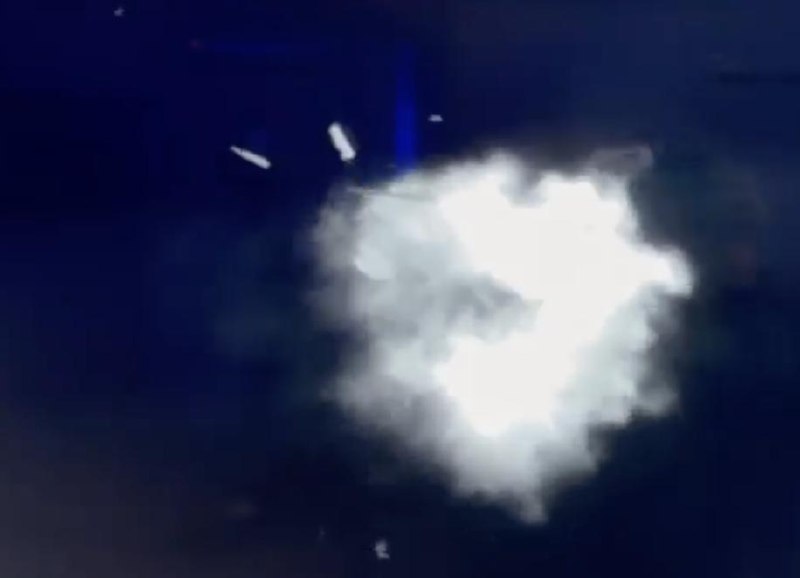
Kinetic defeat at intercept point
2.3 Performance
2.3.1 Coverage Area & Minimum RCS
Detection/tracking coverage extends to ≈3 km radius (≈28 km²). The
engagement zone extends to ≈800 m radius at altitudes up to ≈100 m
(≈2 km²). Minimum RCS for detection/tracking at max range is −20 dBsm.
2.3.2 Operational Scenarios
The system employs an explosive effector as its sole mitigation method. An autonomous interceptor is launched
and guided to the designated threat, neutralized via onboard warhead detonation at intercept. As a kinetic,
precision-guided system, it selectively engages a single designated target without affecting other UAS present.
2.3.3 Tracking, Limitations & Integration
Provides 3D tracking for targets with RCS −20 dBsm at speeds >150 m/s. APIs are available for rapid
integration with third-party or partner detection systems.
2.3.4 Requirements vs. Response
Requirement
Tehiru Response
Effective coverage area (km²).
Up to 3 km radius, 360° coverage; ≈28.3 km².
Minimum RCS for detection/tracking.
−20 dBsm
sUAS detection/tracking range by size.
Group 1: 3 km · Group 2: 8 km · Group 3: 15 km (max).
Line-of-sight dependent; target within field of view. No limit on drone type/size.
Setup time & manpower.
Mobile radar: 3 operators, 45–90 min. Fixed radar: ≈1 day.
Operators required.
One operator.
Tehiru Aerial Systems, Inc.
6
Requirement
Tehiru Response
Display / share data with other systems; ingest formats.
Laptop display of target position/track data; integration with AiCloud C2, ATAK, NINJA; data exchange via REST, MQTT, ZMQ, and direct-connect APIs.
APIs for external integration.
REST, MQTT, ZMQ, Direct-Connect, ATAK, NINJA.
Supporting information.
AI object classification, environmental learning, dynamic clutter filtering, multi-radar control, historical track retention, secure remote management, cloud-connected or standalone operation.
Hive — open, four-bay layout
2.3.5 Capabilities-Sought Coverage
Capability Sought (RFI §2.3.1)
Satisfied
Citadel
Munition — Kinetic Interceptor
Full
Primary. Autonomous interceptor + onboard warhead; validated vs. Group 1 & 2.
Munition — Ordnance
Full
Complete fragmentation warhead (150–200 g HE, HV ESAD).
Munition — Missiles
Partial
Powered, externally-guided vehicle; not a rocket-motor missile.
Entanglement (net / fouling)
Not offered
Kinetic effector only.
Directed Energy
Not offered
No DE effector.
GNSS Denial · RF Interference · Nav Denial/Spoofing
Not offered
Defeats targets kinetically regardless of target navigation/RF.
2.4 Demonstration Availability
The Citadel Interception System will be demonstrable in November 2026 at any of:
California, Florida, Nevada, Oklahoma, or Texas (exact site TBD).
Tehiru Aerial Systems, Inc.
7
Visual Appendix
System Imagery
Supplementary imagery referenced from Sections 1–2. Provided for context; not counted against section page limits.
Fig. A-1 — Citadel engagement sequence: interceptor in flight → terminal closure on a fixed-wing sUAS → kinetic defeat.
Fig. A-2 — The Hive: closed transport state (left) and open state showing the four-bay interior magazine layout (right).Fig. A-3 — Cipher modular interceptor: quad-rotor airframe with cylindrical warhead payload and onboard compute.